Central Iowa remodeling guides
How to waterproof a basement before remodeling in Central Iowa
Basement waterproofing before remodel means grading, crack sealing and a tested sump pump first. The 2026 steps Central Iowa homeowners take before finishing.
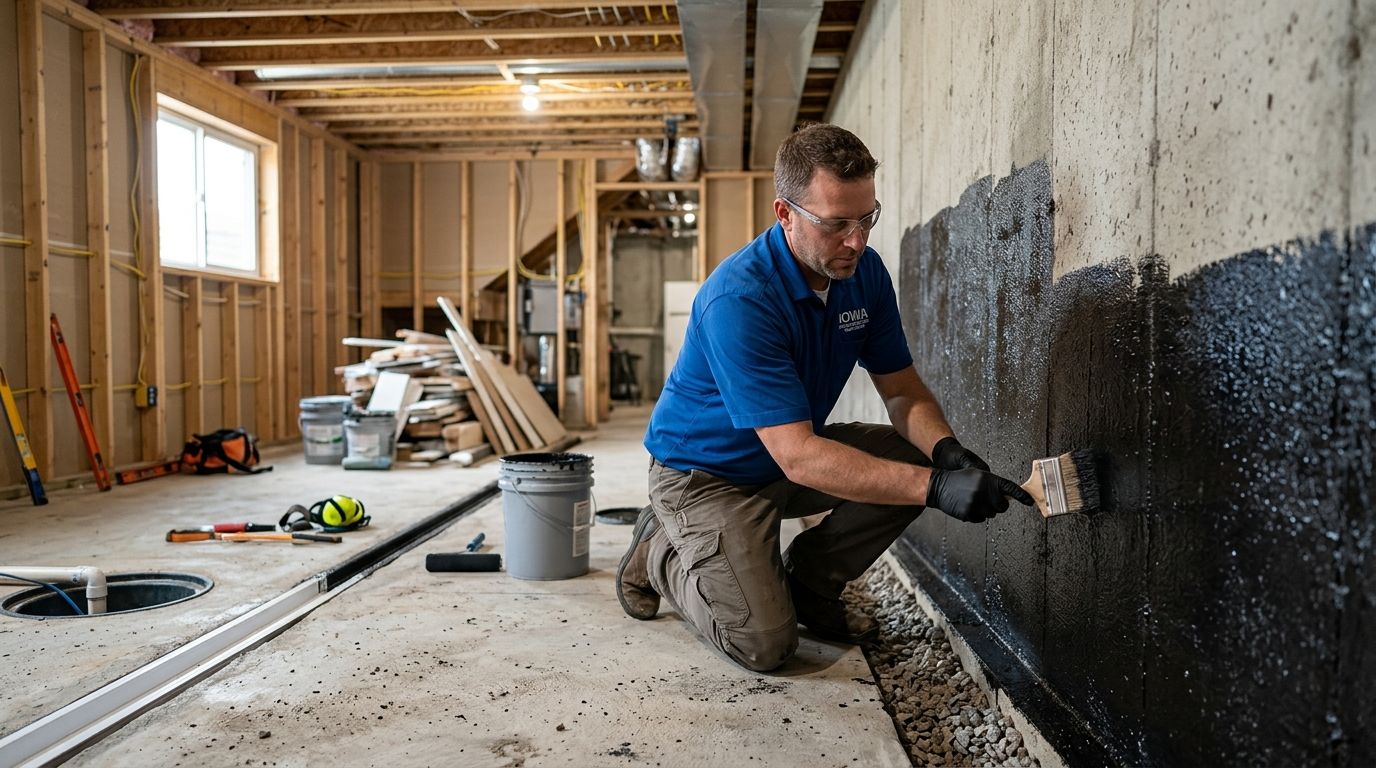
Waterproofing a basement before remodeling means fixing exterior grading and drainage, sealing foundation cracks, confirming the sump pump works under load, and getting indoor humidity under control — all before framing, drywall, or flooring goes in. Skip this step and a finished basement in Central Iowa turns into a mold and warped-flooring problem within one wet season. The hidden cost isn't the waterproofing itself — it's the flooring, drywall, and insulation you'll tear out and replace if you finish over a basement that still leaks.
- Basement waterproofing before remodel starts with grading, crack sealing, and a tested sump pump — not paint-on sealer.
- Iowa's frost line runs roughly 42 inches deep, which is why foundation cracks widen every winter freeze-thaw cycle.
- Indoor relative humidity above 50% invites mold on new drywall within weeks — run a dehumidifier before finishing.
- Phoenix Construction Solutions inspects moisture sources before quoting a basement finish in Des Moines, Ankeny, Waukee, and Norwalk.
Why this matters
A finished basement built over an unresolved moisture problem fails fast. Drywall wicks water from the bottom up, laminate flooring cups and separates, and insulation loses its R-value once it's damp — none of that is a slow process once the ground thaws each spring. Waterproofing before remodeling is not optional prep work; it's the difference between a basement finish that lasts and one you redo in three years. Central Iowa's clay-heavy soil holds water against foundation walls longer than sandy soil does, which is exactly why grading and drainage get fixed first, before anyone talks about basement flooring options or paint colors.
How do you waterproof a basement before remodeling in Central Iowa?
Work through these steps in order — each one depends on the one before it.
- Fix the grading first. Soil should slope away from the foundation at a minimum of 6 inches over the first 10 feet — that's the standard residential minimum, and many older Central Iowa homes fall short of it after decades of settling.
- Check gutters and downspouts. Downspouts that dump water within 3 feet of the foundation undo any grading work you just did. Extend them or route them to a drain.
- Inspect and seal foundation cracks. Hairline cracks widen every winter once water gets in and freezes. Iowa's frost line runs roughly 42 inches deep, so foundation walls take a real freeze-thaw beating each season.
- Test the sump pump under load. Pour several buckets of water into the pit and confirm the pump kicks on and discharges away from the foundation. Add a battery backup if the basement has ever taken on water during a power outage.
- Run a dehumidifier and monitor humidity for 1-2 weeks before framing starts. The EPA recommends keeping indoor relative humidity between 30% and 50% — higher than that and mold gets a foothold in new drywall almost immediately.
- Confirm egress compliance if you're adding a bedroom. A wet basement and an undersized window are separate problems, but if the 2026 remodel includes a bedroom, pair waterproofing with an egress window installation before drywall goes up.
Exterior drainage: the 6-inch grading rule
Most basement leaks in Central Iowa trace back to water pooling against the foundation rather than a failed waterproofing membrane. That fix is usually simpler than homeowners expect once grading and downspout problems are corrected. A French drain or exterior drain tile only becomes necessary when regrading alone doesn't stop water intrusion.
Homes on a slope or with a walkout basement need this checked every spring. Soil settles, the slope flattens, and the 6-inch drop you established a few years ago quietly disappears.
Interior humidity control: staying under 50%
Even a dry foundation can sweat enough to ruin a finished basement if humidity isn't managed. A basement-rated dehumidifier running continuously through spring and summer keeps relative humidity in the 30-50% range the EPA recommends.
Leave a hygrometer in the space for a couple of weeks before the remodel starts. If humidity won't hold under 50% with a dehumidifier running, there's still an active moisture source to find before you finish the space.
“If humidity won't hold under 50% with a dehumidifier running, don't hang a single sheet of drywall.”
Why basement moisture problems vary house to house
- Foundation age and material — poured concrete resists cracking better than the block foundations common in older Central Iowa homes.
- Lot grading and slope — walkout basements and downhill lots see more water pressure against the foundation wall.
- Gutter and downspout condition — clogged or short downspouts are one of the most common causes of basement moisture in the region.
- Soil type — Iowa's clay-heavy soil drains slowly and holds water against foundations longer than sandy or loam soil.
- Sump pump condition and backup power — a pump with no battery backup fails during the exact storms that cause the most water intrusion.
- Repair history — a house with patched cracks or a past flood needs a closer look before any remodel budget gets set.
Get your basement checked before you finish it
Licensed and insured. Serving Des Moines, Ankeny, Waukee, Norwalk and Central Iowa.
Does waterproofing add much to a basement remodel timeline?
Waterproofing typically adds a few days to a basement remodel timeline in 2026, mostly for the 1-2 weeks of humidity monitoring that runs alongside other prep. The bigger delay comes if crack repair or drain tile work turns up during inspection. Build a contingency into the budget before crews are scheduled — how to finance a basement remodel covers how that contingency usually gets structured.
Can I just paint the walls with waterproof sealant instead?
Waterproof paint alone does not fix active water intrusion — it slows moisture already coming through and can trap water behind the wall when the source is untouched. Grading, drainage, and crack repair come first. Sealant is a finishing step, not a fix.
Is a sump pump required before finishing a basement in Iowa?
A sump pump isn't mandated in every Central Iowa jurisdiction, but any basement with a history of water intrusion needs one tested and working before drywall goes up in 2026. Skipping that test is the most common reason a newly finished basement floods in its first year.
FAQ
What is the first step in basement waterproofing before a remodel?
The first step is fixing exterior grading so soil slopes away from the foundation at least 6 inches over the first 10 feet. Gutters and downspouts get checked next, since short or clogged downspouts undo grading work almost immediately.
How much humidity is too much for a finished basement?
Relative humidity above 50% is too much. The EPA recommends keeping indoor humidity between 30% and 50% to prevent mold, and a hygrometer run for 1-2 weeks before framing confirms whether the space is ready.
Do all basements in Central Iowa need drain tile?
No. Drain tile only becomes necessary when regrading and downspout fixes don't stop water intrusion on their own. Clay-heavy Central Iowa soil drains slowly, which is why some lots need it and others don't.
How deep does frost go in Iowa and why does it matter for basements?
Iowa's frost line runs roughly 42 inches deep, and foundation walls take freeze-thaw stress every winter down to that depth. That's why hairline cracks widen year over year if they aren't sealed before a remodel.
Can I finish a basement without waterproofing it first?
You can, but drywall, flooring, and insulation installed over an unresolved moisture problem usually fail within one to three wet seasons. Waterproofing first costs far less than replacing finished materials later.
Does adding a basement bedroom require an egress window?
Yes. A legal basement bedroom requires an egress window meeting minimum size and opening requirements, which is separate from any waterproofing work. Pair the two projects when the remodel includes a bedroom conversion.
How long should I monitor a basement for moisture before remodeling?
Run a dehumidifier and monitor humidity for at least 1-2 weeks before framing starts. If humidity won't stay under 50% during that window, an active moisture source still needs to be found.
Is basement waterproofing before remodel worth it on a dry basement?
Yes, at minimum for grading, downspouts, and a sump pump test. A basement that has stayed dry for years can still fail after one storm if water is pooling against the foundation.
One last thing
The basements that flood after a remodel almost always gave a warning first — a musty smell, a damp spot behind the water heater, or a sump pump running more often after heavy rain. Chase those signs down before the drywall goes up in 2026, not after. Phoenix Construction Solutions is licensed and insured, based in Carlisle, and serves Des Moines, Norwalk, Pleasant Hill, Ankeny, Urbandale, Waukee, and West Des Moines. Call (515) 505-8781 before scheduling a basement finish if any of that sounds familiar.